
Find the story question
Ask what the audience is waiting to find out. Will the lost object reach its owner? Will two rivals cooperate? Will a tiny invention work? The question should be understandable without a long explanation of the world.
Write a one-sentence answer for yourself, even if the audience will not know it until the end. That destination helps you remove scenes that introduce atmosphere but never change the situation. An attractive setting is useful when it makes the decision feel specific; it is not a substitute for a decision.
Give each beat a job
A beat is a meaningful change in action or understanding. Introduce the situation, complicate it, let the character make a choice and show the consequence. You can use more or fewer scenes, but every added scene should provide new information or a changed emotional state.
Write the action in terms a viewer can see. “The fox is generous” is a judgement; “the fox leaves the last berry beside the sleeping bird” is a playable event. Let the image do that work rather than asking a narrator to explain every trait.
Use dialogue selectively
Short lines are easier to place around reactions and visual action. Give a line a purpose: a request, a refusal, a misunderstanding or a decision. If it only describes what is already visible, try removing it and watch whether the scene still makes sense.
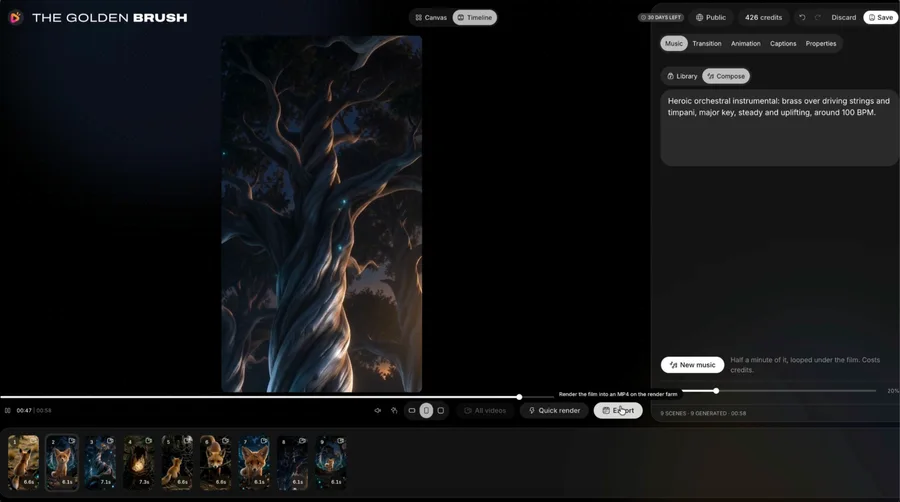
RocketToons describes voice generation and line-level re-voicing. Those tools are helpful for revising delivery, but first decide which words belong. Keep character names and unusual terms consistent, and listen for pronunciation before committing the entire sequence to motion.
Prompt the right details
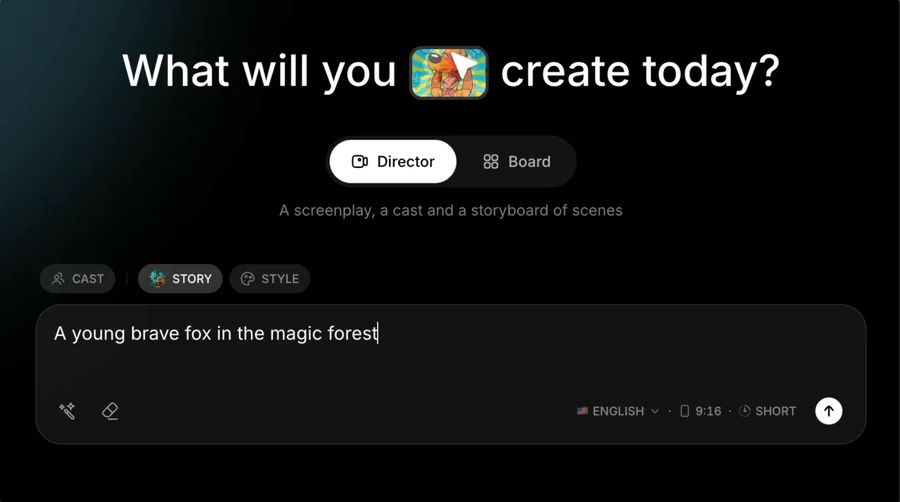
Give the story entry an audience, a protagonist, a goal, an obstacle and an ending. Specify the intended format and tone. Add visual direction separately where possible so the story instruction does not become a pile of conflicting camera commands.
The supplied Director screen shows cast, story and style as distinct choices. Use those choices deliberately. If the first outline drifts, correct the missing story information rather than adding generic adjectives such as cinematic, amazing or viral. Clear cause and effect usually does more for comprehension than a longer style description.
Revise with a cold read
Read the script without looking at the illustrations. Then inspect the scene plan without relying on the narration. Each pass finds a different weakness: unclear motivation in the text, or missing visual information in the pictures. Bring them back together only after both communicate.
End as soon as the central question is answered. A short final reaction can make the consequence feel human; a second explanation of the moral often weakens it. Save a clean approved script before generating alternatives, so experimentation does not erase the version you meant to produce.
- What changes in this beat?
- What must be visible?
- Does the line add information?
- Can the audience follow the cause and effect?
- Does the ending answer the opening question?
Your questions
Can RocketToons help write the script?
Yes. The official description includes idea-to-script assistance. Treat its draft as creative material to edit, not a reason to skip story decisions.
Is this a tested formula for more views?
No. It is an editorial method for clearer storytelling, not a measured promise of retention, reach or income.
Make the next decision
Write actions that reveal character. Better story decisions give RocketToons clearer material to animate.
RocketToons Tutorial: First Film
Build a manageable first RocketToons story: choose a premise, approve the cast, review the storyboard, add audio and finish an intentional first export.
RocketToons for Shorts & Reels
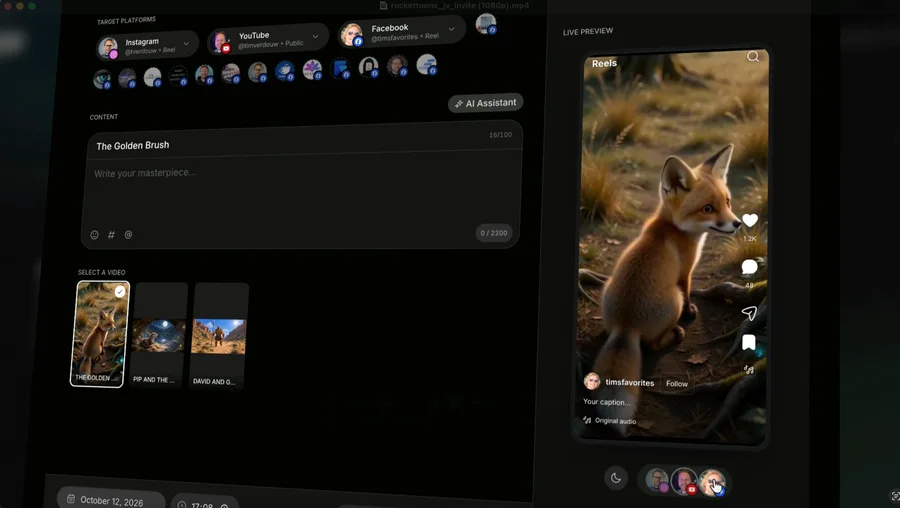
Plan RocketToons vertical cartoons for Shorts and Reels with readable action, purposeful openings, caption space and a checked final crop.
RocketToons Animated Fables
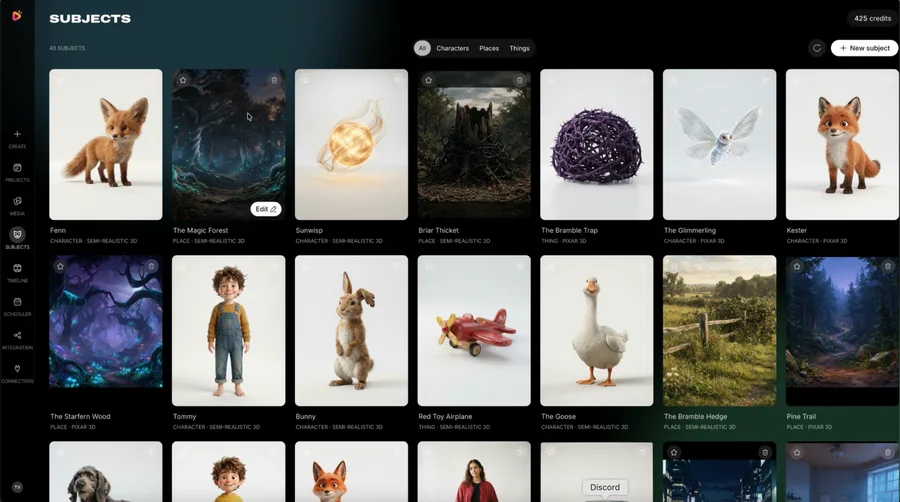
Adapt a fable with RocketToons using an intentional point of view, compact cast, readable story beats and careful source-rights checks.